Understanding EICR's in 2026 for UK Landlords and Homeowners
Table of Contents
- Introduction: Why EICRs Matter More Than Ever in 2026
- What Is an EICR? (Electrical Safety Explained)
- Why UK Landlords Must Take EICRs Seriously
- Legal Requirements for EICRs in 2026
- What an EICR Inspection Covers
- Common Electrical Faults Found in Rental Properties
- FAQs
- How ZA Electrical Supports UK Landlords
Why EICRs Matter More Than Ever in 2026
Electrical safety has become one of the most heavily regulated responsibilities for UK landlords. As we move into 2026, enforcement around Electrical Installation Condition Reports (EICRs) is stricter than ever, with local authorities actively issuing fines, improvement notices, and even banning orders for non-compliance.
For landlords and letting agents, an EICR is no longer “just paperwork.” It is a legal safeguard, a tenant-safety requirement, and a risk-management tool that protects both property and reputation.
At ZA Electrical, we work closely with landlords, property managers, and lettings agencies across the UK to ensure electrical compliance is not only achieved—but maintained with confidence.
Contact Us
What Is an EICR and Why It Is Essential in 2026
Understanding an Electrical Installation Condition Report (EICR)
An EICR (Electrical Installation Condition Report) is a formal assessment of a property’s fixed electrical systems. This includes:
- Consumer units (fuse boards).
- Wiring and cabling.
- Sockets and switches.
- Earthing and bonding.
- Fixed electrical equipment.
The purpose of an EICR is to identify potential hazards, electrical deterioration, and non-compliance with current UK safety standards.
In 2026, EICRs are particularly important due to:
- An ageing UK housing stock
- Increased use of high-load appliances
- Greater scrutiny from councils and insurers
- Updated interpretations of BS 7671 Wiring Regulations
Why EICRs Are Not Optional for Landlords
If you rent out a residential property in England, an EICR is a legal requirement, not a recommendation. Failure to comply can result in:
- Fines of up to £30,000.
- Invalid landlord insurance.
- Tenant legal claims.
- Enforcement action by local authorities.
For letting agents, ensuring landlord compliance is equally critical, as liability can extend to managing parties.
UK EICR Legal Requirements for Landlords in 2026
EICR Regulations Every Landlord Must Know
Under the Electrical Safety Standards in the Private Rented Sector (England) Regulations, landlords must:
- Have a valid EICR completed at least every 5 years
- Ensure inspections are carried out by a qualified electrician
- Provide a copy of the EICR to:
- Existing tenants (within 28 days).
- New tenants (before move-in).
- Local authorities (within 7 days if requested).
Failure to act on remedial works listed in the report is considered non-compliance.
How Regulations Have Tightened for 2026
In 2026, councils are:
- Conducting proactive compliance audits.
- Cross-checking EICRs during licensing renewals.
- Issuing fines without warning notices.
- Rejecting outdated or incorrectly issued reports.
This makes working with a reputable contractor like ZA Electrical essential for landlords who want peace of mind.
What an EICR Inspection Covers in Detail
Fixed Wiring and Electrical Infrastructure
An EICR focuses on permanent electrical installations, not portable appliances. The inspection assesses:
- Wiring condition and insulation integrity
- Correct circuit protection
- Overloading risks
- Earthing adequacy
- Fire hazards within consumer units
Older properties often fail due to outdated wiring methods that were once acceptable but no longer meet safety standards.
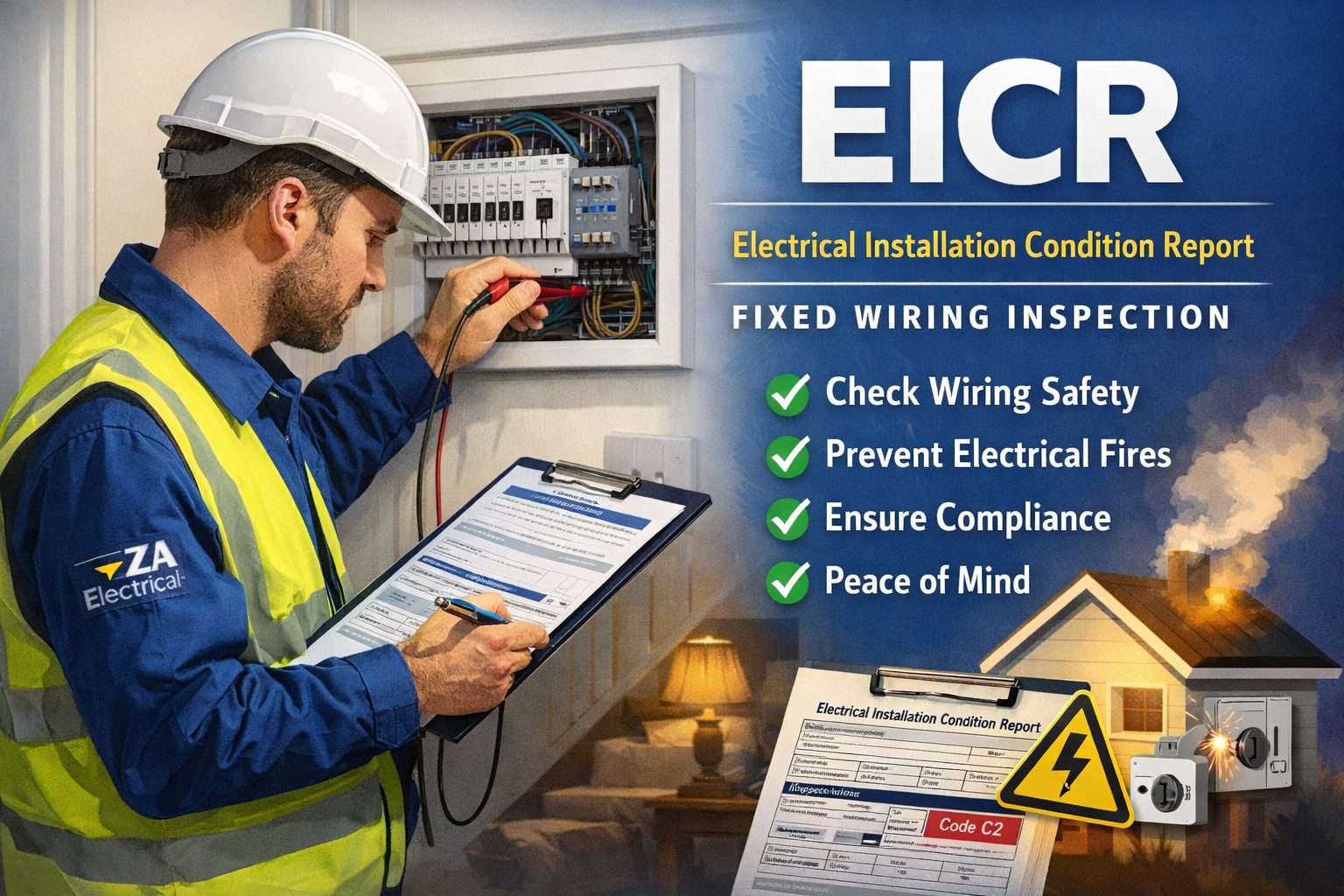
EICR Coding System Explained (C1, C2, C3)
Electrical issues are categorised using industry-standard codes:
- C1 – Danger Present: Immediate risk, urgent action required
- C2 – Potentially Dangerous: Must be fixed promptly
- C3 – Improvement Recommended: Not unsafe, but upgrade advised
In 2026, any C1 or C2 automatically fails the EICR, requiring remedial work before compliance is achieved.
Common Electrical Issues Found in Rental Properties
Typical EICR Failures in UK Homes
From our experience at ZA Electrical, the most common EICR failures include:
- Lack of RCD protection.
- Old fuse boards.
- Inadequate earthing.
- Damaged cabling.
- DIY electrical alterations.
- Overloaded circuits.
Many landlords are unaware these issues exist until an inspection is carried out—making regular EICRs essential.
Why Older Properties Are at Higher Risk
Properties built before the 1990s often contain wiring systems that:
- Cannot support modern electrical demand.
- Lack proper protection devices.
- Pose a higher fire and shock risk.
An EICR highlights these risks early, allowing landlords to budget and plan upgrades rather than face emergency repairs.
Why Landlords Trust ZA Electrical for EICRs
Specialist EICR Services for UK Landlords
ZA Electrical provides:
- Fully certified EICR inspections.
- Fast turnaround reports.
- Clear explanations of findings.
- Cost-effective remedial solutions.
- Support for landlords, HMOs, and letting agents.
We understand the pressures landlords face and structure our service to minimise disruption while ensuring full legal compliance.
Learn more about our electrical safety services here: ZA Electrical – Electrical Safety & Compliance
Is your rental property EICR-compliant for 2026?
Don’t wait for enforcement action or tenant complaints. 👉 Book your professional EICR inspection with ZA Electrical today
EICRs for HMOs, Lettings & Complex Rental Properties in 2026
EICR Requirements for HMOs (Houses in Multiple Occupation)
HMOs carry higher electrical risk due to increased occupancy, heavier electrical loads, and shared facilities. As a result, EICRs for HMOs are under greater scrutiny in 2026.
Local authorities now expect:
- More frequent inspections in high-risk HMOs.
- Zero tolerance for C1 or C2 observations.
- Clear documentation during licensing applications.
For HMO landlords, an EICR is often reviewed alongside:
- Fire risk assessments.
- Gas safety certificates.
- Emergency lighting inspections.
Failure to provide a valid EICR can result in licence refusal or revocation.
ZA Electrical works closely with HMO landlords to ensure EICRs align with local council licensing standards, not just national regulations.
EICRs for Letting Agents Managing Multiple Properties
Letting agents are increasingly responsible for ensuring landlord compliance. In 2026, councils regularly issue enforcement notices to both landlords and managing agents.
Key compliance risks for letting agents include:
- Accepting outdated EICRs.
- Missing remedial deadlines.
- Using non-qualified electricians.
- Poor record keeping.
Partnering with a single trusted provider, such as ZA Electrical, ensures consistency, audit-ready documentation, and rapid issue resolution.
How Much Does an EICR Cost in 2026?
Average EICR Pricing for UK Landlords
While prices vary depending on property size and complexity, typical 2026 EICR costs are:
- 1–2 bedroom flat: £120–£180
- 3–4 bedroom house: £180–£250
- HMOs: £250–£450+
These costs are significantly lower than:
- Non-compliance fines
- Emergency electrical repairs
- Insurance claim rejections
Why Cheap EICRs Can Cost You More
Many landlords fall into the trap of choosing the cheapest quote. However, low-cost EICRs often result in:
- Incomplete inspections
- Invalid reports
- Missing certification details
- Council rejection
ZA Electrical focuses on accuracy, compliance, and long-term value, not rushed inspections.
Remedial Works After an EICR: What Landlords Must Do
Understanding Remedial Work Deadlines
If an EICR identifies C1 or C2 issues, landlords must:
- Complete repairs within 28 days (or sooner if specified)
- Obtain written confirmation of completed work
- Provide documentation to tenants and councils
In 2026, councils routinely follow up to verify completion.
Can Tenants Stay During Remedial Works?
In most cases, yes—unless a C1 danger requires immediate isolation. ZA Electrical prioritises:
- Minimising disruption
- Flexible scheduling
- Safe temporary solutions where possible
This is especially important for tenanted and multi-let properties.
How Regular EICRs Protect Landlords Long-Term
EICRs as a Risk Management Tool
Beyond legal compliance, EICRs:
- Reduce fire risk
- Prevent costly emergency failures
- Strengthen landlord insurance claims
- Protect against tenant litigation
Electrical faults remain one of the leading causes of domestic fires in the UK. Regular inspections significantly reduce this risk.
External safety guidance from Electrical Safety First (UK) highlights the importance of periodic electrical inspections in rented homes.
Supporting Property Value and Tenant Trust
Tenants in 2026 are more safety-conscious than ever. Providing a valid EICR:
- Builds trust
- Encourages longer tenancies
- Reduces complaints
- Enhances your reputation as a responsible landlord
For professional landlords, EICRs are now part of a quality assurance strategy, not just compliance.
Frequently Asked Questions (FAQs)
- How often do landlords need an EICR in 2026?
Every 5 years, or sooner if recommended by the previous report.
- Is an EICR mandatory for all rental properties?
Yes, for all residential rental properties in England, including HMOs.
- What happens if I fail an EICR?
You must complete remedial works and obtain confirmation before the property is considered compliant.
- Can I use the same EICR for selling a property?
An EICR can support a sale, but buyers may request a more recent inspection.
- Who can legally carry out an EICR?
Only a qualified, competent electrician registered with a recognised scheme.
Why ZA Electrical Is the Right Partner for 2026 Compliance
Specialist Electrical Compliance Services
ZA Electrical offers:
- EICRs for single lets, HMOs, and portfolios.
- Fast digital reporting.
- Remedial works and certification.
- Ongoing compliance reminders.
- UK-qualified, insured electricians.
We understand landlord pressures, council expectations, and tenant safety—making compliance straightforward.
Explore our services here: ZA Electrical – Landlord Electrical Services